




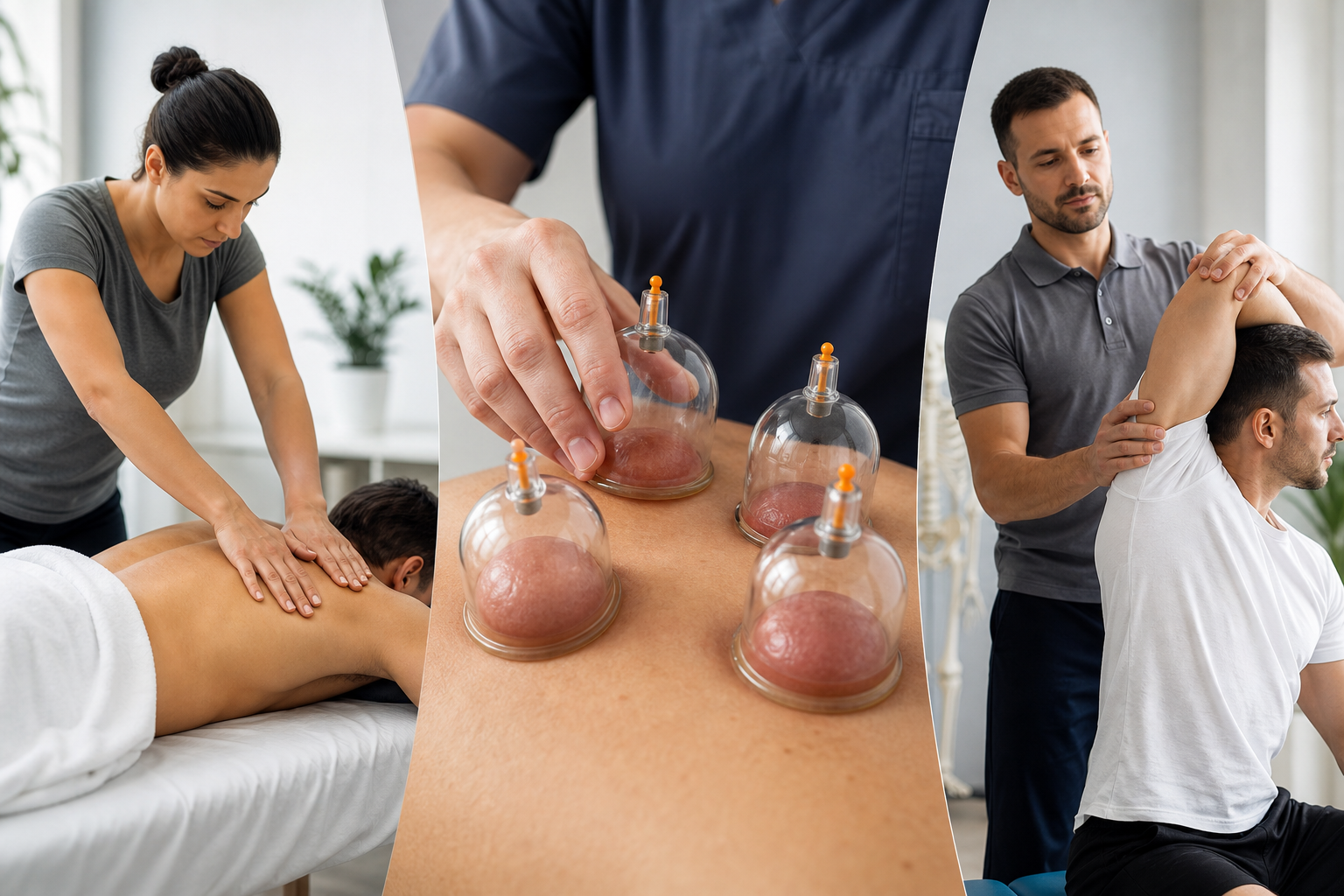
Cupping therapy benefits compared with massage and physiotherapy

Cupping therapy benefits compared with massage and physiotherapy
What this article covers and how to use it
This article lists the main cupping therapy benefits described in clinical summaries, explains how cupping is applied, and compares what cupping typically offers versus massage, physiotherapy, and chiropractic/manual therapy. It highlights the strength and limits of the evidence and sets out practical safety guidance for people in Markham considering cupping as part of rehabilitation or wellness care.
Claims about musculoskeletal relief and safety are supported by clinical summaries and reviews. For example, general descriptions of cupping and its uses are discussed by WebMD and in an NCBI clinical overview, which also notes technique differences and safety tradeoffs in clinical settings WebMD and NCBI Bookshelf. Remarkable Physiotherapy lists cupping among its in‑clinic services and offers multi‑disciplinary care, open seven days a week with direct billing to major insurers Remarkable Physiotherapy. Use this piece to decide whether to raise cupping with your clinician and to plan an integrated approach to recovery.
How cupping works and the main techniques
Cupping applies suction to the skin using rigid or flexible cups. Suction lifts the skin and superficial tissues which can redistribute blood flow, affect local mechanoreceptors, and produce a strong tactile stimulus that many people perceive as a deep tissue effect. Practitioners may leave cups in place for a few minutes or perform moving cupping where cups glide across lubricated skin.
Two common approaches are dry cupping and wet cupping. Dry cupping uses suction only. Wet cupping combines suction with controlled skin incisions to draw out small amounts of blood. In Western clinical practice dry cupping is more common because it carries lower biohazard and infection risk than wet cupping, a distinction noted in clinical summaries NCBI Bookshelf and patient overviews WebMD. Your clinician should describe the technique and infection control steps before treatment.
Six evidence‑centred benefits of cupping therapy

Below are six specific benefits reported in clinical reviews and patient resources. Each item explains typical effects, how strong the evidence is, and practical context for use.
1. Short term relief of local musculoskeletal pain
Cupping is frequently used for neck, shoulder, and back pain and some randomized trials and reviews show short term reductions in pain intensity compared with no treatment or sham procedures. Systematic evidence maps and reviews highlight consistent signals for pain relief, though effect sizes and duration vary across studies. This benefit is plausible given cupping’s local mechanical and circulatory effects, but results are mixed and often limited by small sample sizes and varied methods NCBI Bookshelf.
2. Reduced muscle tightness and increased perceived range of motion
Many people report feeling looser and able to move more comfortably after cupping. This outcome may come from decreased soft tissue stiffness, a change in local sensory input, or placebo and contextual effects. Clinical summaries note improvements in subjective stiffness and some objective range of motion measures in short term follow ups WebMD. Expect the largest gains immediately after treatment with variable longevity.
3. Complementary analgesia for chronic conditions
For ongoing or recurrent pain, cupping can be an adjunct to a broader rehabilitation program. Reviews identify cupping as one component that may reduce pain and improve function when combined with exercise or manual therapy, rather than as a standalone cure NCBI Bookshelf.
4. Deep tactile stimulation and relaxation
Cupping provides intense local sensory input that many patients describe as relaxing. This effect can lower perceived stress and muscle guarding, which is helpful for tension patterns and postural pain. Patient resources describe cupping as a form of strong manual therapy or deep tissue massage when performed by trained clinicians WebMD.
5. Useful diagnostic feedback for therapists
Practitioners sometimes use short cupping trials to map areas of heightened tissue sensitivity, adhesions, or restricted mobility. The presence and pattern of post‑treatment marks and symptom response can guide manual therapy or targeted exercise prescription in a multidisciplinary plan.
6. Non pharmaceutical option for symptom management
For patients who prefer to reduce medication use where possible, cupping offers a non‑drug approach to short term symptom control. Clinical overviews note that cupping is commonly selected for patients seeking complementary or integrative therapies, and it is typically combined with conventional rehabilitation techniques NCBI Bookshelf.
Cupping vs massage, physiotherapy, and chiropractic care
Cupping is best understood as a complementary modality. Below is a concise comparison to help you decide which approach to prioritise or combine.
- Cupping, strong local suction creates focal sensory and circulatory changes. Best for short term pain relief, reducing muscle tightness, and as an adjunct for symptom mapping. Effects are often immediate but can be transient.
- Massage therapy, hands on soft tissue techniques aim to reduce tension, improve circulation, and promote relaxation. Massage offers sustained mechanical modulation through therapist skill and repeated sessions, and it commonly improves comfort and mobility over a treatment course.
- Physiotherapy, a clinical rehabilitation approach that combines assessment, exercise prescription, manual therapy, and education to address the root causes of pain and functional loss. Physiotherapy targets long term recovery, strength, and movement retraining.
- Chiropractic/manual therapy, focuses on joint mechanics, spinal alignment, and manual interventions. Manual therapy may provide rapid symptom relief and improved mobility, often combined with therapeutic exercise for injury recovery.
When to use each option
- Choose cupping as a complementary, short term tool to relieve focal tightness or as a bridge to active rehabilitation.
- Prioritise physiotherapy when you need diagnosis, progressive exercise, and long term recovery from injury.
- Consider massage for recurrent muscle tension and relaxation needs, especially where sustained hands on work is useful.
- Use chiropractic or manual therapy when joint mechanics are a central issue, and combine with physiotherapy for lasting function.
A local clinic offering multiple disciplines can combine cupping with follow up exercise or manual therapy to improve both immediate comfort and longer term outcomes. Remarkable Physiotherapy lists cupping among its services and provides multidisciplinary care under one roof, which supports this combined approach Remarkable Physiotherapy. For more patient perspectives and reasons people try cupping for stubborn tension see the clinic article “7 reasons more people are trying cupping therapy for stubborn muscle tension“.
Safety, side effects, and when not to get cupping
Common and expected effects include circular skin marks or bruises, mild temporary soreness, and increased warmth at treated areas. These marks usually fade over several days. WebMD and clinical summaries describe these common responses and note that dry cupping has fewer infection risks than wet cupping WebMD and NCBI Bookshelf.
Key safety considerations
- Avoid cupping over broken skin, skin infections, open wounds, active rashes, or in areas at high risk of bleeding.
- Discuss anticoagulant use, bleeding disorders, or pregnancy with your clinician before treatment.
- Prefer dry cupping in standard clinical settings to minimise biohazard exposure and infection risk, unless strict medical protocols for wet cupping are in place and clinically justified NCBI Bookshelf.
- Seek immediate medical review for unexplained heavy bleeding, signs of infection after cupping, or if treatment worsens neurological symptoms.
What to expect in a cupping session at Remarkable Physiotherapy in Markham

Remarkable Physiotherapy lists cupping therapy among its in‑clinic services and offers integrated care options so cupping can be combined with physiotherapy, chiropractic, or massage as needed Remarkable Physiotherapy. The clinic advertises open seven day hours and direct billing with major insurance companies to reduce administrative friction for patients Remarkable Physiotherapy.
A typical appointment flow
- Brief clinical assessment to confirm suitability and discuss goals.
- Explanation of the chosen cupping method, expected sensations, and possible marks.
- Treatment of targeted areas with dry cupping for a few minutes per cup, possibly combined with manual techniques or exercise instruction.
- Post‑treatment reassessment and a plan for follow up, which may include exercise, manual therapy, or repeat cupping sessions if appropriate.
Decision checklist: is cupping right for you and how to combine it with rehab
Use this quick checklist before booking a cupping session.
- Symptom type: focal muscle tightness, localized pain, or tension patterns often respond best to cupping.
- Primary goal: immediate relief and reduced guarding versus long term functional recovery. If you need strength, gait, or movement re‑training, prioritise physiotherapy and use cupping as an adjunct.
- Medical safety: not suitable over open skin, infections, or in some bleeding disorders. Ask about anticoagulant use and pregnancy precautions.
- Evidence mindset: expect probable short term benefit for pain and tightness but variable duration and mixed trial quality in the literature NCBI Bookshelf.
- Combine treatments: plan cupping sessions around active rehabilitation and follow up with home exercises or manual therapy as recommended by your physiotherapist.
How to book, what to ask, and the final next step
Before your appointment ask the clinic which cupping method they use and how they manage infection control. Ask whether the practitioner is trained in combining cupping with exercise or manual therapy so your session supports a larger rehabilitation plan. Confirm direct billing and appointment hours if that affects scheduling. Remarkable Physiotherapy provides multidisciplinary care and direct billing to major insurance companies to simplify payment and follow up Remarkable Physiotherapy.
Frequently asked questions
What are the main cupping therapy benefits backed by clinical reviews
Clinical summaries report short term reductions in local musculoskeletal pain, decreased subjective muscle tightness, and improved perceived range of motion. Reviews emphasise that benefits are often immediate but may be transient and that cupping is best used as a complement to broader rehabilitation rather than as a standalone cure NCBI Bookshelf and WebMD.
Is cupping therapy safe and what side effects should I expect
Common effects include circular skin marks, mild bruising, and temporary soreness. Dry cupping has a lower infection risk than wet cupping. Discuss bleeding risk, anticoagulants, pregnancy, and open skin conditions with your clinician before treatment NCBI Bookshelf and WebMD.
How does cupping compare with massage or physiotherapy for back and neck pain
Cupping provides a strong local stimulus that can give rapid symptom relief. Massage offers sustained soft tissue work and relaxation. Physiotherapy addresses underlying movement, strength, and functional issues for long term recovery. Often the best results come from combining these approaches under a single plan.
How many cupping sessions are typically suggested and how will I know if it is helping
There is no fixed number. Many clinicians trial one to a few sessions and reassess the response. Look for reduced pain, improved range of motion, and easier progress with prescribed exercises as indicators that cupping is helping.
Will insurance cover cupping therapy at Remarkable Physiotherapy in Markham
Coverage depends on your insurer and plan. Remarkable Physiotherapy offers direct billing with major insurance companies to simplify payment, but you should check your plan for specific coverage details and any required practitioner type Remarkable Physiotherapy.
Final step: if you want to explore cupping therapy benefits in a coordinated rehabilitation plan, book an assessment with Remarkable Physiotherapy to discuss suitability, technique, and how cupping can complement your care Remarkable Physiotherapy.