




What are the cupping therapy benefits?

What are the cupping therapy benefits?
This article gives an evidence-backed summary of cupping therapy benefits, the conditions research supports, typical session expectations, common side effects, and how cupping fits within a rehabilitation plan. The review draws on authoritative summaries including StatPearls (NCBI), WebMD and Healthline to describe the strongest clinical findings and known limitations (StatPearls), (WebMD) and (Healthline). Local availability is verified: Remarkable Physiotherapy in Markham offers cupping therapy and provides multidisciplinary care with seven-day hours and direct billing to major insurers cupping therapy and Remarkable Physiotherapy.
Quick evidence summary: what the research supports
Research and clinical reviews show the clearest benefits of cupping are for certain types of pain and some headache disorders. Systematic summaries report benefit for musculoskeletal pain, and StatPearls cites studies where wet cupping was associated with reduced headache severity and fewer headache days in people with migraines or tension headaches (StatPearls). Secondary clinical summaries outline plausible mechanisms that include increased local blood flow, changes in tissue mechanics, short-term increases in pain threshold and local metabolic changes, though study quality and methods vary across trials (Healthline). Consumer resources describe cupping as an adjunctive, noninvasive option to relieve pain and promote relaxation similar to deep-tissue massage (WebMD). Individual response varies and cupping is most often used alongside other therapies rather than as a standalone cure.
Top cupping therapy benefits (evidence-backed list)
Below are six evidence-supported benefits. Each item summarises what the literature indicates and how clinicians commonly apply cupping in practice.
1 — Relief of musculoskeletal pain
What the research says, reviews report that cupping can reduce pain intensity for conditions such as neck, shoulder and low back pain compared with no treatment or some control interventions, though effect sizes and study quality vary (StatPearls). Trials typically use dry cupping or short series of treatments.
Who may benefit and how it is applied, people with persistent muscle or soft-tissue pain who have not achieved full relief from exercise or manual therapy sometimes gain enough symptom control from cupping to participate more fully in active rehabilitation. Clinicians often apply dry cupping for localized pain, using a small number of cups for five to 15 minutes per area.
2 — Reduction in migraine and tension-type headaches
What the research says, StatPearls summarises studies where wet cupping reduced average headache severity substantially and decreased the number of headache days in treated groups, with some trials reporting large relative reductions in symptom measures in selected settings (StatPearls). These favourable results are most consistent for wet cupping in specific study protocols.
Who may benefit and how it is applied, some patients with chronic migraine or tension-type headaches report fewer and less severe attacks after a series of cupping sessions. Wet cupping involves controlled skin puncture followed by suction, so it should only be performed by trained clinicians when clinically indicated.
3 — Improved local blood flow and tissue recovery
What the research says, clinical summaries propose that suction increases superficial circulation and can change the mechanical properties of skin and fascia, which may support tissue recovery after acute or repetitive strain (Healthline). Evidence on long-term structural change is limited, but short-term perfusion effects are reasonably well described.
Who may benefit and how it is applied, athletes or workers with localized overuse symptoms sometimes use cupping as a recovery adjunct, combined with targeted exercise and soft-tissue techniques to help reduce soreness and improve range of motion.
4 — Reduced inflammation and local metabolic effects
What the research says, reviews note that cupping may affect local inflammatory mediators and anaerobic metabolism in the treated tissue, though the clinical translation of these biochemical effects remains under study (Healthline). The direction and magnitude of these changes can vary by technique and patient.
Who may benefit and how it is applied, cupping may be considered for localized inflammatory conditions after a clinician evaluates risks and expected gains. It is often combined with other anti-inflammatory measures and progressive loading exercises when rehabilitation goals include tissue recovery.
5 — Increased pain threshold and relaxation
What the research says, consumer-focused resources describe cupping as producing both physiological and perceptual changes that raise pain thresholds temporarily and produce a relaxation response similar to deep-tissue massage (WebMD), (Healthline). Placebo and patient expectation effects contribute to reported short-term relief.
Who may benefit and how it is applied, people seeking symptomatic relief and improved comfort before exercise or hands-on treatment may find cupping useful as a short-term aid to reduce guarding and permit safer, more effective rehabilitation work.
6 — Adjunctive benefit when combined with manual therapies and exercise
What the research says, clinical summaries and practice reports highlight that cupping is frequently used as an adjunct rather than a stand-alone therapy. The best evidence supports integrating cupping with physiotherapy, massage and targeted exercise when the aim is to reduce pain enough to enable active rehabilitation (StatPearls).
Who may benefit and how it is applied, a multidisciplinary clinic can combine cupping with manual therapy, myofascial release and supervised exercise to create a cohesive plan. To review local integrated options, see Remarkable Physiotherapy’s multidisciplinary services and the clinic cupping page Remarkable Physiotherapy and cupping therapy.
What to expect during and after a cupping session

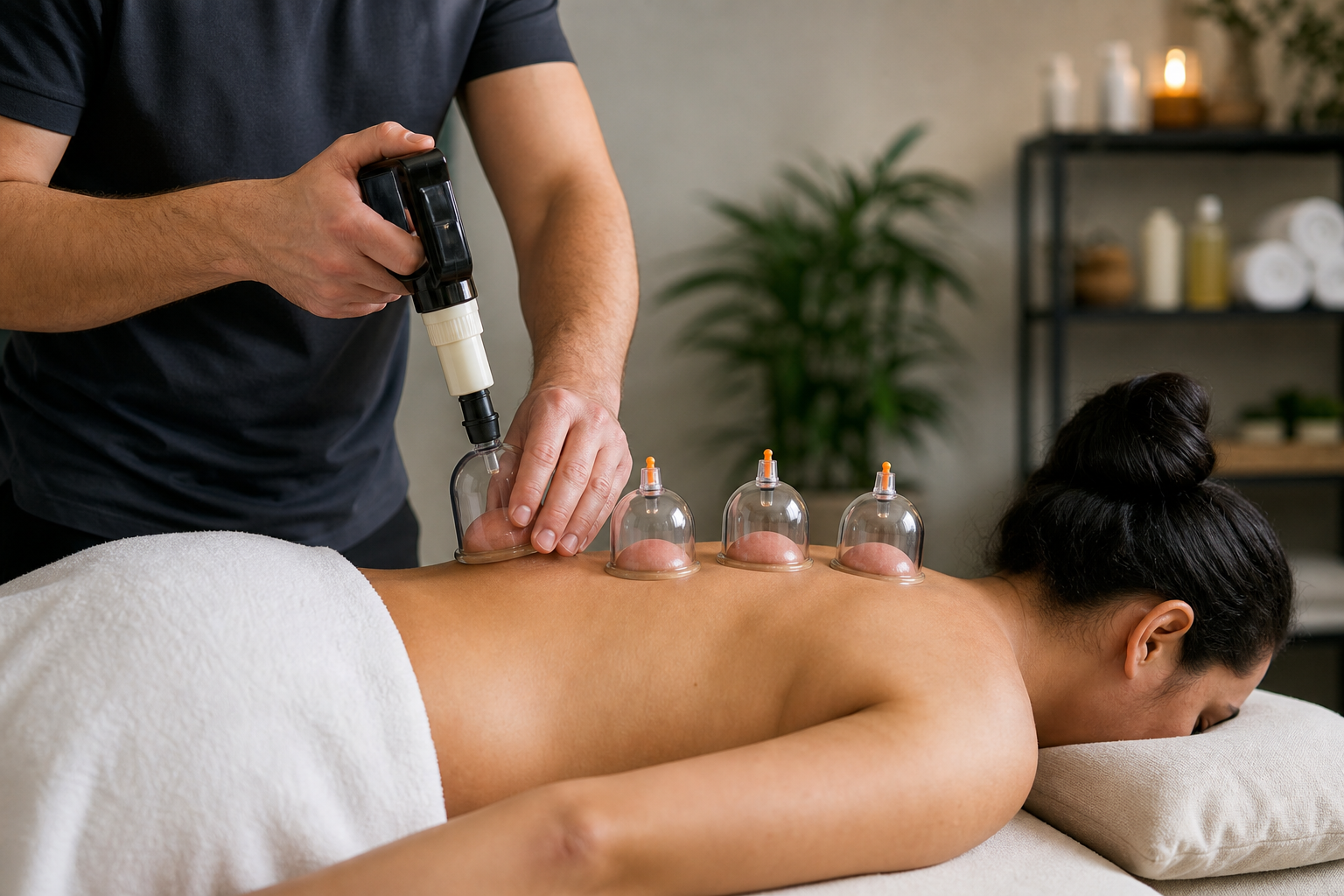
Most clinics follow a standard sequence: intake and consent, a short assessment, and selection of cup type. Dry cupping uses suction only, while wet cupping includes a controlled skin prick followed by suction and is offered only by trained providers in appropriate settings. Sessions typically run 10 to 30 minutes depending on the area and technique used. During treatment you will feel local pulling or pressure rather than sharp pain. Circular marks or bruises are common and usually fade over days to two weeks. Aftercare commonly includes gentle hydration, avoiding hot baths or intense exercise for 24 hours, and monitoring the skin for signs of infection (WebMD), (Healthline).
Safety, common side effects and contraindications
Common side effects are temporary bruising, soreness, mild skin irritation and faint circular marks. Less common risks include infection when skin is broken, scarring after repeated wet cupping, and adverse bleeding in people who use anticoagulant medications. StatPearls and clinical summaries recommend avoiding cupping over open wounds, active skin infections, unstable medical conditions, and in people with certain bleeding disorders or uncontrolled anticoagulation (StatPearls), (WebMD). Discuss medications, underlying health conditions and pregnancy status with a regulated clinician before booking cupping.
How to decide if cupping is right for you: a short checklist
- Primary goal: Do you want short-term pain relief to engage in exercise, or are you seeking a long-term cure?
- Skin and bleeding risk: Any open wounds, skin conditions, or blood-thinning medication?
- Previous response: Have manual therapy or massage helped in the past?
- Tolerance for marks: Are you comfortable with temporary skin marks or bruising?
- Provider setting: Will a regulated clinician perform the procedure in a clean, professional clinic?
If you answer yes to the last item and your medical risks are low, cupping is reasonable to trial as part of a supervised rehabilitation plan.
How cupping fits into a multidisciplinary rehab plan

Physiotherapists and chiropractors commonly add cupping to a plan when pain limits the patient’s ability to do active exercises. By reducing guarding and improving local mobility, cupping can make stretching and strengthening more tolerable and effective. At a multidisciplinary clinic, cupping is coordinated with manual therapy, myofascial release, vestibular work or targeted exercise prescriptions so the short-term symptomatic gains translate into functional improvement.
Where to get cupping therapy in Markham and how to book
Remarkable Physiotherapy offers cupping therapy as part of its rehabilitation and wellness services. The clinic operates seven days a week and provides direct billing to major insurance companies to reduce administrative friction for patients, which can make accessing cupping therapy easier Remarkable Physiotherapy and cupping therapy. To check suitability and schedule an assessment, use the clinic contact options on the service page or request a consultation so a regulated clinician can review your medical history and treatment goals.
Real objections, limits and honest caveats
Common concerns include: “I do not want marks” — marks are common and usually temporary, so dry cupping or a limited treatment time may reduce visibility. “The evidence is mixed” — evidence quality varies, and clinicians should be transparent that cupping often offers short-term relief and is best used with active rehabilitation. “I take blood thinners” — cupping may increase bleeding risk, so discuss with your prescriber and clinician before proceeding. Cupping is rarely a stand-alone cure and should not replace medically necessary care or emergency treatment.
Frequently asked questions
What conditions do cupping therapy benefits most commonly help?
Cupping shows the clearest support for musculoskeletal pain and some headache types, including migraine and tension-type headaches, according to clinical summaries (StatPearls) and consumer resources (WebMD).
Is cupping therapy safe and what side effects should I expect?
Common side effects are bruising, soreness and temporary skin marks. Less common risks include infection when wet cupping is used and bleeding in people on anticoagulants. Discuss medical history with a regulated clinician before treatment (StatPearls), (WebMD).
How many cupping sessions are typically needed before I notice improvement?
Response varies; some patients notice short-term relief after one session while others need a short series. A clinician will recommend a frequency based on your condition, goals and response to initial treatments.
Does Remarkable Physiotherapy offer cupping therapy and direct billing?
Yes. Remarkable Physiotherapy provides cupping therapy and offers direct billing with major insurance companies, and the clinic is open seven days a week to improve access Remarkable Physiotherapy and cupping therapy.
Will cupping leave permanent marks or scarring?
Most marks are temporary and fade over days to two weeks. Repeated wet cupping or improper technique can increase the risk of scarring, so only accept these procedures from trained clinicians when medically appropriate (StatPearls).
Key takeaway: cupping therapy benefits are best understood as evidence-supported options for short-term pain relief, headache reduction and local tissue effects. They are most effective when integrated into a broader rehabilitation plan under the guidance of a regulated clinician.
Ready to discuss whether cupping could help your recovery?
Would you like to book an assessment to review suitability, direct billing and a personalised plan at Remarkable Physiotherapy in Markham? Book or learn more