




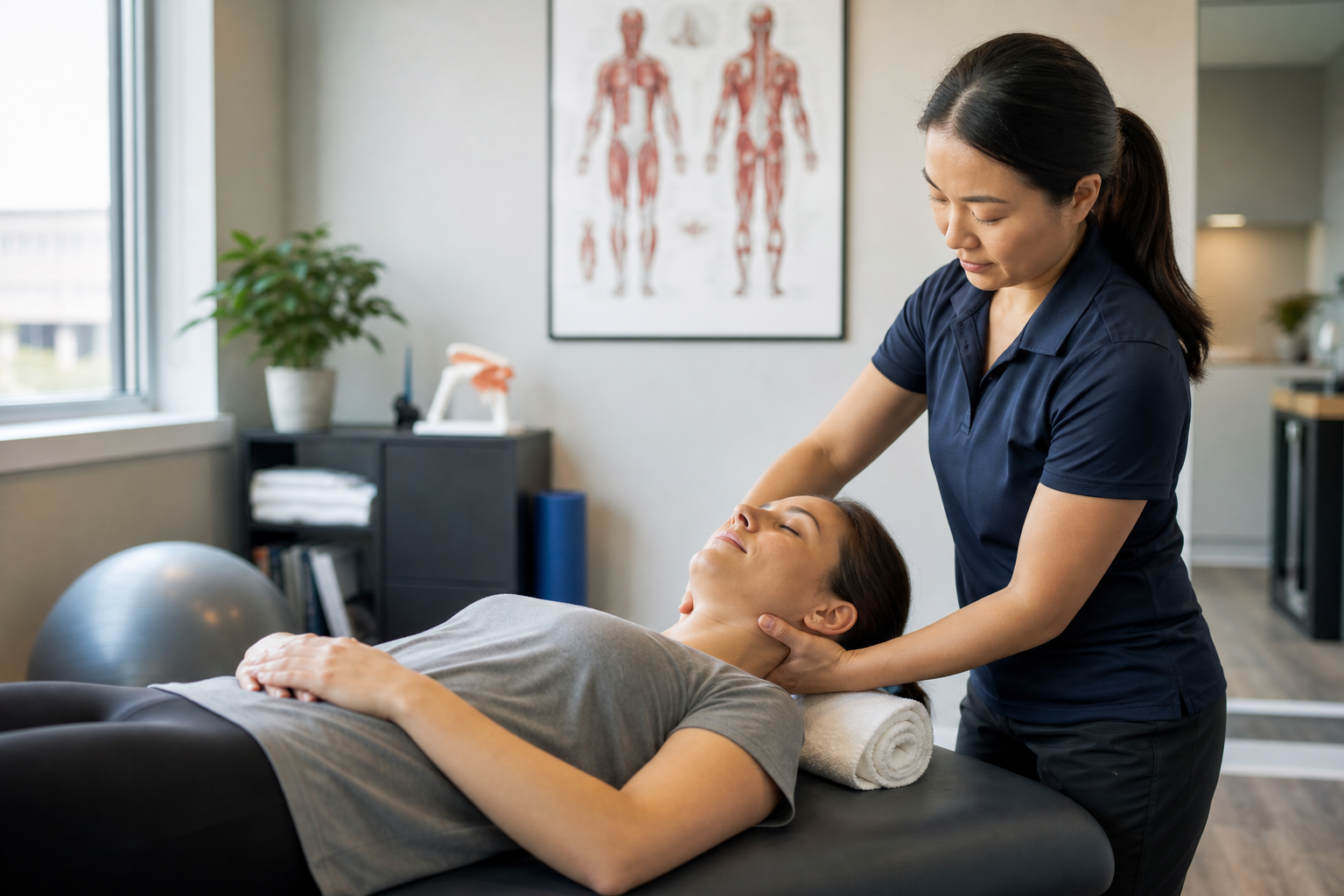
Manual therapy techniques and when they help in Markham

Manual therapy techniques and when they help in Markham
If you have muscle pain, stiffness, or limited movement, hands-on treatments can be part of a safe and effective recovery plan. This article explains common manual therapy techniques in plain language, summarizes the evidence about when they help, lists safety checks and red flags, and describes how Remarkable Physiotherapy in Markham integrates hands-on care with exercise and follow up.
What manual therapy is and who performs it
Manual therapy is a group of skilled hands-on techniques clinicians use to assess and treat joints, muscles, and soft tissues. Typical methods include joint mobilization and manipulation, soft tissue approaches, traction, and fascial techniques. Regulated clinicians such as physiotherapists and chiropractors apply these methods as part of a broader rehabilitation plan rather than as a standalone cure.
Authoritative reviews describe manual therapy as part of routine musculoskeletal care and emphasise careful patient assessment and selective use of hands-on methods alongside active treatments such as exercise. For technical and guideline context, see the NCBI clinical review and a recent guideline summary on interventions for low back pain.
Further reading: the NCBI Bookshelf review on manual therapy, a guideline revision on low back pain, and a local primer that explains common techniques in accessible terms.
- Manual Therapy for Chronic Non-Cancer Back and Neck Pain: NCBI Bookshelf
- Interventions for the Management of Acute and Chronic Low Back Pain: PMC
- Manual Therapy Techniques Explained | M.O. Therapy Markham
Evidence context: when manual therapy helps and its limits
High-quality musculoskeletal care emphasises patient-centred assessment, screening for serious conditions, selective imaging, and active rehabilitation such as exercise. Clinical guidelines consistently recommend using manual therapy as an adjunct to these active strategies, not as the only treatment for chronic back or neck pain. Hands-on techniques can provide short-term symptom relief and improved motion while patients follow an exercise program and activity plan for longer term recovery.
Clinicians screen for red flags and psychosocial factors that change the treatment plan. The guideline review linked above summarises these recommendations and supports using manual techniques within a coordinated treatment plan rather than by themselves.
Seven manual therapy techniques worth considering

Below are seven common manual therapy techniques, described in plain language with typical uses, brief evidence notes, and basic precautions. Use these descriptions to discuss options with a clinician and compare approaches when booking care in Markham.
Joint mobilization
What it is: Gentle, graded oscillatory movements applied to a joint to restore motion and reduce stiffness and pain. Therapists select grades from soft movement to firmer mobilization depending on tolerance.
When clinicians use it: To reduce mechanical joint stiffness, improve range of motion after injury, and complement exercises that retrain movement.
Evidence and precautions: Joint mobilization often produces short-term symptom improvement and works best combined with active rehabilitation. Avoid or modify it with fractures, unstable joints, or active inflammatory joint disease.
Joint manipulation
What it is: A high-velocity, low-amplitude thrust to a joint, sometimes accompanied by an audible release. Manipulation aims for rapid restoration of joint motion in selected patients.
When clinicians use it: For certain mechanical neck or back problems where examination indicates a joint restriction that a targeted thrust may correct.
Evidence and precautions: Manipulation may offer quick relief for some patients, but it requires careful screening for red flags such as progressive neurological signs, vascular conditions, or instability. Only trained, regulated clinicians should perform manipulation.
Soft tissue release and therapeutic massage
What it is: Hands-on pressure, stretching, or friction applied to muscles and connective tissue to reduce tension and improve local circulation and mobility.
When clinicians use it: To ease muscle tightness, reduce discomfort, and prepare tissues for active exercise or movement retraining.
Evidence and precautions: Soft tissue work can reduce soreness and improve short-term comfort. It typically complements strengthening and range-of-motion exercises. Avoid deep work over open wounds, active infection, or recent thrombosis.
Myofascial release
What it is: Slow, sustained pressure and targeted stretching applied to fascia and connective tissue to reduce restrictions and improve mobility.
When clinicians use it: For persistent stiffness or restricted movement that limits function, as part of a plan that includes specific mobility and strengthening exercises.
Evidence and precautions: Some patients report meaningful improvements after myofascial work. Adapt the approach for people with fragile skin, bleeding risks, or connective tissue disorders.
Trigger point and neuromuscular techniques
What it is: Focused pressure or release techniques applied to tight nodules within muscles that can refer pain elsewhere. Methods include sustained pressure, ischemic compression, and follow-up stretching.
When clinicians use it: To treat local muscle pain that refers to other regions, such as specific neck or shoulder pain patterns, and to improve muscle length before exercise.
Evidence and precautions: Trigger point techniques commonly produce short-term relief. Temporary soreness or mild bruising is possible; clinicians will tailor pressure and frequency to tolerance.
Cupping therapy
What it is: Suction cups on the skin create negative pressure intended to affect soft tissue and local circulation.
When clinicians use it: As a complementary soft tissue method for short-term symptom relief and to prepare tissues for movement work.
Evidence and precautions: Results are mixed in studies; some patients report reduced pain and improved mobility. Expect temporary skin marks and mild soreness. Avoid cupping over fragile skin, open wounds, or areas at risk for bleeding.
Joint and spinal traction
What it is: Manual or mechanical gentle pulling force applied to a joint or spinal segment to reduce nerve root compression and decrease joint loading.
When clinicians use it: For selected patients with radicular nerve symptoms or symptoms thought to come from compressive loading, when assessment suggests traction may help.
Evidence and precautions: Traction can help some nerve root complaints but is usually one component of a broad plan. Avoid it for unstable spinal conditions, recent surgery, or fractures.
Safety, red flags and when manual therapy is not appropriate
Before applying manual techniques, clinicians screen for serious conditions that require medical review. Defer hands-on care until clearance if any of the following are present:
- New or progressive neurological deficit such as sudden weakness or bowel or bladder changes
- Signs of systemic infection, fever, or night sweats
- Unexplained weight loss or a history of cancer that raises concern for metastatic disease
- Recent significant trauma or suspected fracture
- Known vascular conditions affecting the neck or head that require physician assessment
Minor and expected side effects include transient soreness, mild bruising from soft tissue work, and short-lived fatigue. Clinicians should stop or modify treatment if a patient reports new severe pain or neurological symptoms during a session.
Decision checklist: how to choose a technique and a clinician
Use this checklist when comparing techniques and providers in Markham:
- Problem match: Identify whether your main issue is mechanical stiffness, local muscle pain, or nerve symptoms; techniques differ by target.
- Clinician training and regulation: Choose regulated physiotherapists or chiropractors with manual therapy training; ask about experience with your condition.
- Integration with active care: Prefer clinics that combine hands-on methods with a clear exercise plan and measurable goals.
- Clear goals and follow up: A clinician should state expected short-term outcomes and a plan to reassess progress.
- Practical access: Check hours, booking flexibility, and whether the clinic offers direct billing with your insurer.
For practical questions to ask and a first-visit checklist, see Choosing a physiotherapy clinic Markham: decision checklist and first-visit tips.
What to expect at your first visit

Your initial assessment usually includes a medical history review, a movement and neurological screen, and a focused physical examination. The clinician will decide whether manual therapy is appropriate, explain the chosen techniques, set measurable short-term goals, and provide a specific home exercise program.
Practical tips: wear loose, comfortable clothing that allows access to the area being treated, bring your health and insurance information, and bring any referral paperwork. Arrive prepared with a list of symptoms and relevant medical history.
How Remarkable Physiotherapy uses manual therapy in Markham
Remarkable Physiotherapy offers manual therapy, soft tissue release, myofascial release, and cupping as part of multidisciplinary rehabilitation. The clinic combines physiotherapy, chiropractic care, massage, acupuncture, and vestibular therapy to create integrated plans when patients need combined approaches. Remarkable Physiotherapy is located at 8 Shadlock St #1, Markham, and advertises seven-day hours and direct billing with many major insurers to reduce administrative burden for patients. See the clinic website for service details and hours.
Clinic website: Remarkable Physiotherapy.
Practical steps to book an assessment and prepare
To book an initial assessment, visit the clinic website or call the clinic directly. Bring your insurance card, any referral paperwork, and comfortable clothing. Expect the clinician to explain which manual techniques they recommend, why those techniques suit your problem, and how they will measure progress during the first few sessions.
Final CTA: To schedule an assessment or ask whether manual therapy suits your problem, visit Remarkable Physiotherapy.
Frequently asked questions
Is manual therapy safe and are there risks I should know about?
Manual therapy is generally safe when delivered by trained, regulated clinicians and when appropriate screening is performed first. Expected minor effects include temporary soreness or skin marks from certain soft tissue methods. Clinicians will stop treatment and refer you for medical review if red flags are present.
How many manual therapy sessions will I need for neck or back pain?
There is no fixed number that fits everyone. Some patients notice short-term improvement after one or a few sessions, but sustained recovery usually requires a tailored exercise program and ongoing reassessment. Your clinician should outline expected milestones and reassess progress regularly.
Does insurance typically cover manual therapy in Markham and does Remarkable Physiotherapy direct bill?
Coverage depends on your insurer and plan. Remarkable Physiotherapy supports direct billing with many major insurance companies to simplify payment. Bring your plan details to your first visit to confirm coverage for specific services.
Will manual therapy alone fix chronic back or neck pain?
No. Evidence and guidelines consistently support combining manual therapy with active treatments such as exercise, activity modification, and education. Manual techniques can be a valuable adjunct to reduce pain and improve mobility while you work on long-term recovery through active rehabilitation.
What should I bring and how should I dress for my first manual therapy appointment?
Bring government health identification if needed, your insurance information, and any referral notes. Wear loose, comfortable clothing that allows access to the area being treated, such as shorts for lower limb or back assessments and a sleeveless top for shoulder or upper back work. For a practical checklist of questions to ask and items to bring, see the decision checklist linked above.
Ready to book or ask a question? Visit Remarkable Physiotherapy.