




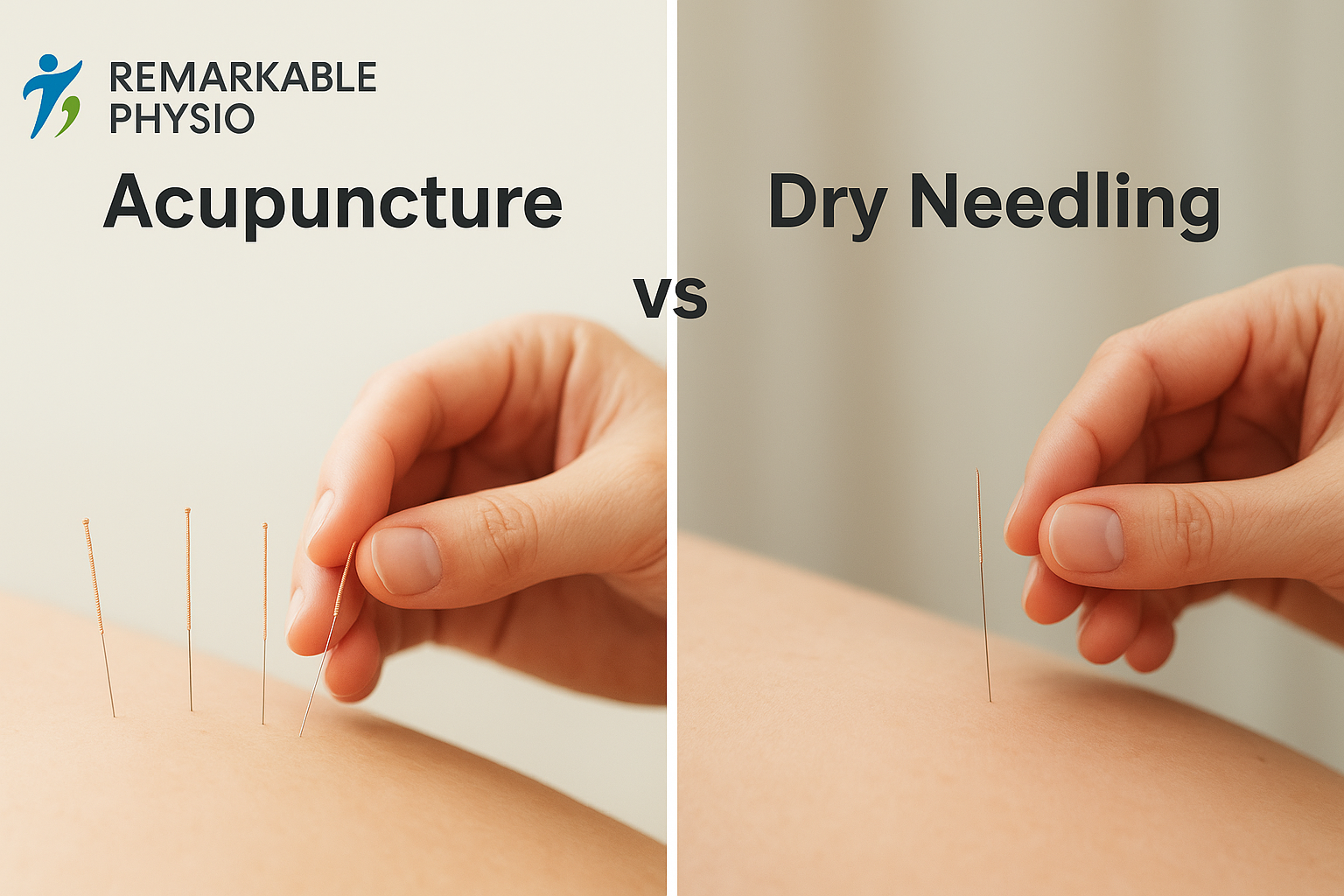
Acupuncture vs Dry Needling in Markham
Acupuncture vs Dry Needling in Markham
If you’re dealing with a sore neck, tight shoulders, a lingering back issue, or pain that keeps showing up after work or workouts, it can be hard to know which treatment to try. Many people in Markham start looking at both traditional acupuncture and dry needling because each may help with pain, muscle tension, and movement restrictions.
The two treatments can sound similar, but they are not the same. Understanding the difference may help you choose the option that fits your symptoms, your comfort level, and the kind of assessment you want from a health professional.
What is Acupuncture vs Dry Needling?
Traditional acupuncture is a treatment rooted in Chinese medicine. It uses very fine needles placed at specific points on the body and is often used to support pain relief, relaxation, stress reduction, and broader wellness goals.
Dry needling is a more contemporary technique often used within physiotherapy and rehabilitation care. It uses thin needles to target trigger points or tight bands of muscle in an effort to reduce tension and support movement. In many clinics, dry needling is one part of a larger treatment plan that may also include exercise, manual therapy, and education.
At Remarkable Physiotherapy in Markham, ON, both approaches may be considered depending on your assessment, your goals, and whether needling is appropriate for you.
Common reasons people look into needling care
- Neck pain that feels tight or stiff after long hours at a desk
- Shoulder pain that makes reaching overhead uncomfortable
- Back pain that flares with sitting, lifting, or standing for long periods
- Muscle tension or trigger points that feel like knots
- Headaches that seem linked with neck and upper back tension
- Sports or dance-related overuse symptoms
- Stress-related muscle guarding or general tightness
- Ongoing discomfort that affects sleep, work, or exercise
Acupuncture vs dry needling: how are they different?
One of the simplest ways to think about the difference is this: acupuncture is a traditional treatment system with a broad approach to health, while dry needling is usually aimed at specific muscles or trigger points as part of rehabilitation care.
Acupuncture practitioners may choose points based on traditional assessment methods and the person’s overall pattern of symptoms. Dry needling, on the other hand, is generally selected to address mechanical pain, local muscle tightness, and movement limitations.
Some people prefer acupuncture because they want a more holistic, calming approach. Others prefer dry needling because they are looking for a treatment that is closely connected to a physiotherapy assessment and exercise plan. Both may be helpful, but the best choice depends on the individual.
How Remarkable Physiotherapy approaches this in Markham
At Remarkable Physiotherapy, your care starts with a thorough assessment. That matters because pain can come from different sources, and a treatment that helps one person may not be the right fit for someone else.
If acupuncture or dry needling is appropriate, it is generally used as part of an individualized plan. That plan may also include therapeutic exercise, manual therapy, soft tissue release, posture or movement advice, or related services such as [link to Physiotherapy page] and [link to Massage Therapy page] when needed.
Our goal is to support your comfort, mobility, and function in a way that fits your symptoms and daily life in Markham, ON. We take time to explain your options clearly so you can make an informed decision.
What to expect at your visit
The process is designed to be straightforward and comfortable.
- Book: Schedule your appointment online or by phone.
- Consultation: Your clinician reviews your symptoms, health history, movement, and goals.
- Treatment: If appropriate, needling may be combined with other hands-on care or exercise-based strategies.
- Follow-up: Your plan is adjusted based on how you respond and what activities still feel limited.
Some people feel cautious before their first needling session, which is completely understandable. Your clinician should explain the process before beginning, answer questions, and make sure you are comfortable throughout the appointment.
Which option may be better for you?
There is no single answer for everyone. Traditional acupuncture may be a better fit if you are looking for a wellness-oriented, whole-person approach. Dry needling may be a better fit if your primary concern is a specific muscle-related pain pattern and you want it integrated into rehabilitation care.
For many people, the most important factor is not the label of the treatment, but whether the clinician completes a careful assessment and builds a plan around the real causes of your symptoms. In some cases, another service such as [link to Chiropractic Care page] or [link to Acupuncture page] may also be discussed depending on your needs.
When to see a professional
You should book an in-person assessment if your pain is lasting longer than expected, limiting daily activities, or recurring despite rest. Prompt evaluation is especially important if you notice numbness, weakness, severe or unusual headaches, dizziness, balance changes, pain after an injury, or symptoms that are getting worse.
We do not recommend self-diagnosing based on treatment names alone. A professional assessment can help determine what is appropriate and whether needling is a good option for you.
Frequently asked questions
Does acupuncture hurt?
Most people describe acupuncture as very mild, and some feel little to no discomfort. You may notice a brief sensation when the needle is inserted, followed by a dull, warm, heavy, or relaxing feeling.
Is dry needling the same as acupuncture?
No. They may use similar tools, but they come from different approaches and are used for different purposes. Acupuncture is based on traditional Chinese medicine, while dry needling is typically used within rehabilitation care for muscle-related pain and tension.
How do I know which one is right for me?
The best choice depends on your symptoms, goals, comfort level, and assessment findings. If you are unsure, a clinician can help explain whether traditional acupuncture, dry needling, or another treatment may be more appropriate.
Can I combine needling with other treatments?
Yes, in many cases it may be combined with physiotherapy, massage therapy, exercise, or manual therapy. A combined plan may support both symptom relief and longer-term movement improvement.
Book care in Markham
If you are comparing acupuncture vs dry needling in Markham, Remarkable Physiotherapy is here to help you understand your options and choose care that fits your needs. We offer direct billing to most major insurance providers and are open 7 days a week.
Call +1 289-800-0441, email remarkablephysio@gmail.com, or book online at remarkablephysio.janeapp.com. We are located at 8 Shadlock St #1, Markham, ON L3S 3K9, Canada.
This article is educational and is not a substitute for individualized professional assessment.