




Plantar Fasciitis Physiotherapy in Markham: What to Expect
Plantar fasciitis can cause heel or arch pain, often strongest with the first steps after rest. In Markham, a physiotherapy assessment can review your foot, ankle, calf flexibility, activity load, footwear and walking goals. Your plan may include education, graded exercises and hands-on care, depending on what the assessment finds.
That first-step heel pain can make a short walk from your Markham home to the car feel harder than it should. Plantar fasciitis is one possible explanation, but heel pain can have other causes too. This guide explains what a physiotherapy assessment may look at and what conservative care can involve.
What is plantar fasciitis?
Plantar fasciitis refers to pain involving the plantar fascia, the strong band of tissue along the bottom of the foot that helps support the arch. Pain is often felt under the heel or in the arch and may be worse after sleep, a long car ride, or sitting. The AAOS describes increased activity, prolonged standing on hard surfaces, foot shape and tight calf muscles as factors that may increase stress on the tissue.[2]
A diagnosis should not be made from a blog post. A physiotherapist can examine your foot and ankle movement, calf flexibility, walking pattern, activity changes and the location of tenderness. Other conditions can produce similar symptoms, including nerve irritation or a heel stress injury.[2]
What can you expect from plantar fasciitis physiotherapy in Markham?
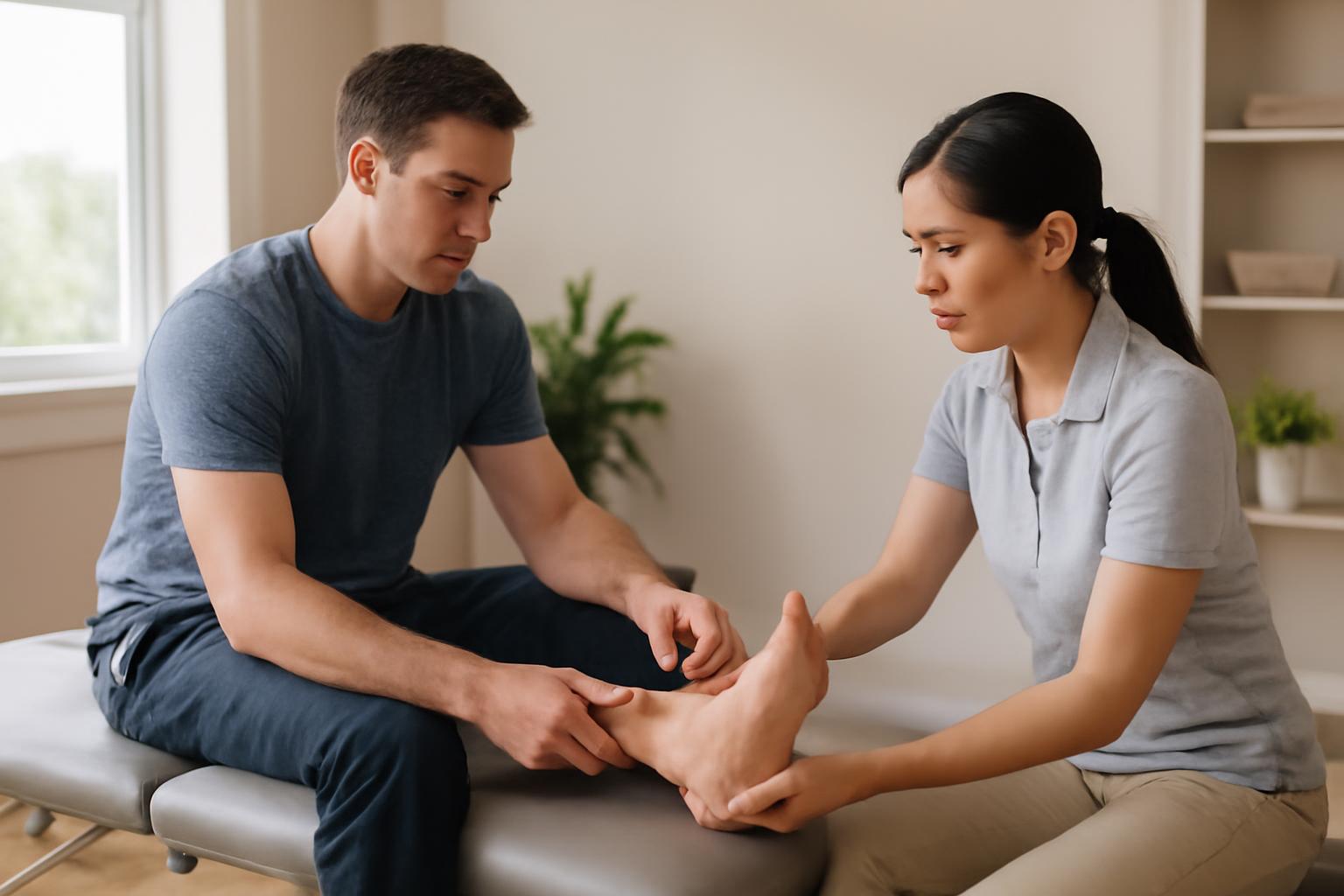
A first visit usually starts with your story: when the pain began, what changed before it appeared, which shoes and surfaces you use, and what you need to get back to doing. The assessment may include foot and ankle movement, calf strength, balance, walking tolerance and the way symptoms respond to loading.
At Remarkable Physiotherapy’s physiotherapy service, education and exercise planning can be tailored to those findings. Depending on the assessment, a plan may include plantar-fascia or calf stretching, progressive strengthening, activity modification, taping or manual therapy. The 2023 clinical practice guideline supports plantar-fascia-specific and calf stretching, and recommends manual therapy for relevant joint or flexibility restrictions.[1]
What can you do while waiting for an assessment?
Start with changes that make sense for your symptoms rather than pushing through a sharp increase in heel pain.
- Wear comfortable shoes with cushioning and support. Avoid suddenly spending long periods barefoot on hard floors if that clearly worsens symptoms.[2][3]
- Temporarily reduce the walking, running or standing load that reliably flares the pain. Lower-impact activity may be a better short-term option for some people.[2][3]
- Use gentle foot and calf mobility only within a tolerable range. Exercise choice and dosage should be matched to your assessment.[1]
- Track first-step pain, walking tolerance and next-day response so loading can be adjusted without guessing.
These suggestions are general education, not a personal treatment plan. Medication questions should go to a physician or pharmacist, especially if you have other conditions or take other medicines.
Do orthotics or night splints always solve heel pain?
No single product is right for everyone. The 2023 guideline advises against using orthoses as an isolated treatment for short-term relief, while allowing that they may be combined with other care in selected cases.[1] A night splint may be discussed when morning first-step pain is consistent.
When should you book an assessment?
Consider an assessment if heel pain is stopping normal activities, keeps returning, follows a clear injury, or does not settle with sensible self-care. Seek prompt medical advice for tingling, loss of feeling, marked swelling, inability to bear weight, or foot pain with diabetes. The NHS also advises assessment when pain is severe, worsening or not improving after self-care.[3]
If you would like to discuss your symptoms with a Markham physiotherapy team, you can book an assessment online. An appointment is an opportunity to ask questions and decide what is appropriate for you; it is not a promise of a particular outcome.
Frequently asked questions
What does plantar fasciitis feel like?
It often causes pain under the heel or along the arch, especially with the first steps after sleeping or sitting. Similar symptoms can come from other foot problems, so persistent, severe or unusual symptoms should be assessed.
Can physiotherapy help plantar fasciitis?
A physiotherapist can assess movement and load factors, then discuss options such as plantar-fascia and calf stretching, strengthening, taping, activity changes or manual therapy. The combination depends on your symptoms, goals and examination.
Should I stop walking if my heel hurts?
Not necessarily. A temporary reduction in activities that clearly increase symptoms may be sensible, while lower-impact movement and a gradual return can be discussed. A clinician can help adjust loading without promising a fixed timeline.
When should I seek care for heel pain?
Arrange an assessment if pain is severe, limits normal activities, keeps returning, follows an injury, or includes tingling or loss of feeling. People with diabetes or other health concerns should seek individualized medical guidance for foot pain.
Sources
- [1] https://apta.org/patient-care/evidence-based-practice-resources/cpgs/heel-pain-plantar-fasciitis
- [2] https://www.orthoinfo.org/bodypart/foot-ankle/plantar-fasciitis-and-bone-spurs/
- [3] https://www.nhs.uk/conditions/plantar-fasciitis/
- [4] https://www.ontario.ca/page/get-physiotherapy
Educational disclaimer: This article is for general education and does not constitute medical advice, diagnosis or treatment. A qualified health professional can assess your situation and discuss options with you.
Published by: Remarkable Physiotherapy · 8 Shadlock St #1, Markham, ON L3S 3K9, Canada · +1 289-800-0441 · Published November 12, 2026