




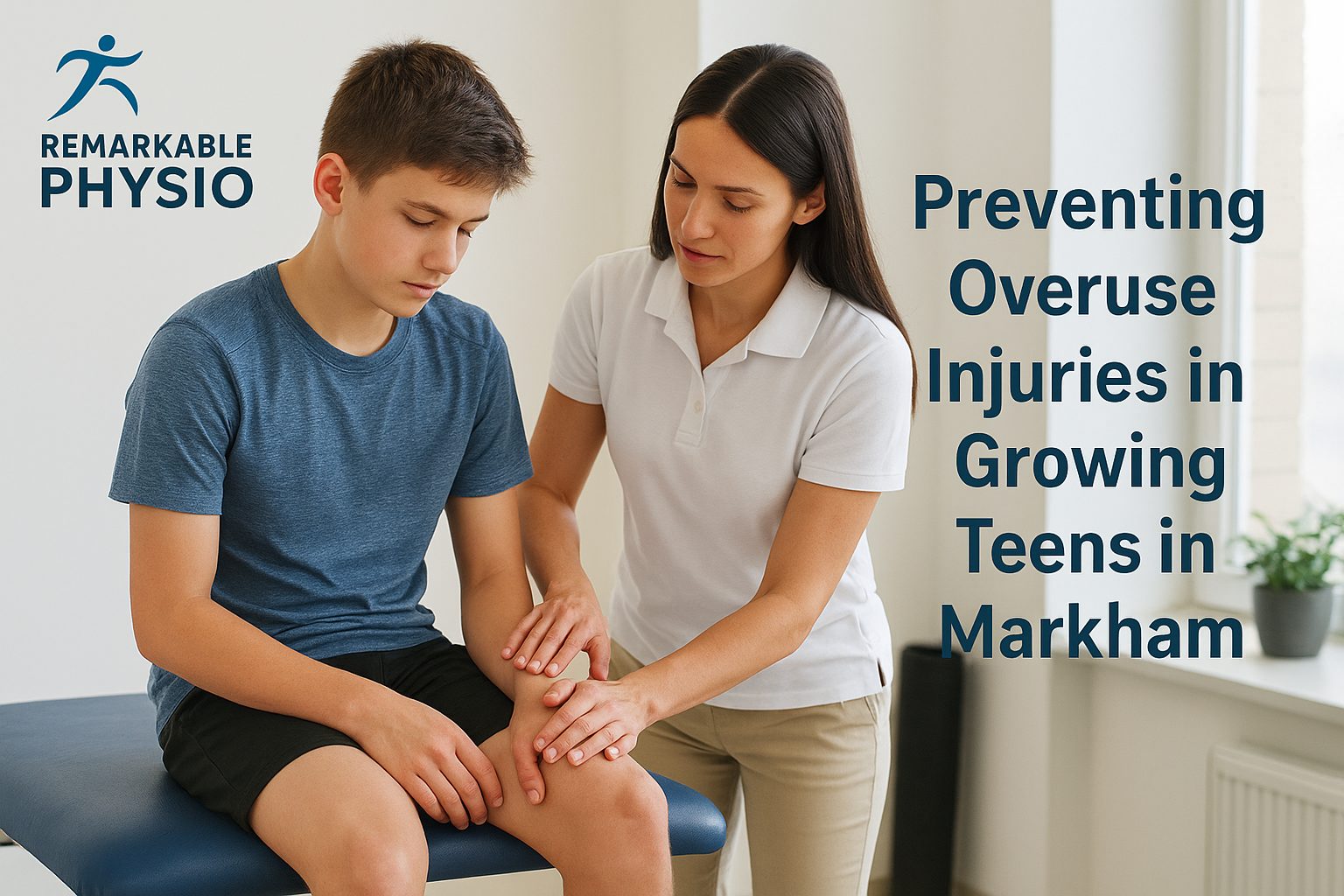
Preventing Overuse Injuries in Growing Teens in Markham
Preventing Overuse Injuries in Growing Teens in Markham
When a teen is training hard, playing multiple sports, or keeping up with a busy school schedule, it can be easy to miss the early signs of strain. A sore knee after practice, a tight heel in the morning, or shoulder pain that keeps coming back may start to interfere with sports, sleep, and even walking between classes.
For families in Markham, ON, these concerns can feel stressful because teens often want to keep pushing through. The good news is that many overuse-related concerns can be better understood early, and supportive care may help young athletes stay active while reducing unnecessary strain.
What are overuse injuries in growing teens?
Overuse injuries can happen when the body is asked to do more repetitive work than it can comfortably recover from. In growing teens, this may be more likely during growth spurts, sport specialization, or heavier training schedules, when bones, muscles, tendons, and joints are all adapting at the same time.
Unlike a single sudden injury, overuse problems often build gradually. A teen may notice soreness that lingers, stiffness after activity, or pain that returns each time they practice, run, jump, throw, or dance.
Common causes and warning signs
- Training too often without enough rest days
- Sudden increases in intensity, distance, or repetitions
- Playing the same sport year-round without variety
- Growth spurts that temporarily change coordination and load tolerance
- Poor recovery, including limited sleep or nutrition challenges
- Technique changes, footwear issues, or equipment that no longer fits well
- Repeated soreness in the same area after activity
- Pain that improves with rest but returns when activity resumes
- Stiffness, reduced range of motion, or limp after sports
- Swelling, tenderness, or weakness around a joint or muscle
In some young athletes, pain may show up in the knees, heels, shins, hips, shoulders, elbows, or low back. Teens involved in running, jumping, gymnastics, hockey, soccer, basketball, volleyball, dance, and racquet sports may all be exposed to different forms of repetitive stress.
How Remarkable Physiotherapy approaches this in Markham
At Remarkable Physiotherapy in Markham, ON, care is built around a careful assessment of the teen’s movement, sport demands, and current symptoms. We do not assume the cause of discomfort; instead, we look at how the body is loading, how the athlete is moving, and what daily activities may be contributing.
Depending on the assessment, an individualized plan may include physiotherapy, manual therapy, therapeutic exercise, myofascial release, soft tissue release, electrotherapeutic modalities, dry needling, massage therapy, or acupuncture. If helpful, we may also discuss [link to Chiropractic Care page], [link to Massage Therapy page], or a return to sport plan that supports a gradual and safe progression back to activity.
For teens with balance, dizziness, or concussion-related concerns, the clinic can also consider [link to Vestibular Therapy page] when appropriate. The goal is to support recovery, movement quality, and confidence without promising a specific timeline or outcome.
What to expect at your visit
Our process is designed to be simple and reassuring for families.
Book: Schedule online, by phone, or by email at a time that works for your family. We are open 7 days a week in Markham.
Consultation: During the first visit, we review the teen’s sport, training volume, symptoms, and movement patterns. We also assess relevant strength, flexibility, balance, and load tolerance.
Treatment: Care may include hands-on therapy, exercise guidance, education on activity modification, and practical strategies to reduce repeated strain while keeping the teen as active as possible.
Follow-up: We adjust the plan based on how the teen is responding and what their sport demands look like week to week. If needed, we can coordinate return-to-play style guidance as part of a structured rehabilitation plan.
How families can help prevent overuse injuries
- Build in at least one to two rest or low-load days each week when possible
- Avoid sudden jumps in training volume or intensity
- Encourage good sleep, hydration, and regular meals
- Make sure shoes, skates, racquets, or other equipment still fit properly
- Support cross-training and movement variation instead of repeating the same load every day
- Take ongoing pain seriously, especially if it changes a teen’s stride, swing, jump, or posture
These small adjustments can support recovery and may help reduce the chance that minor soreness becomes a longer-lasting issue.
When to see a professional
If a teen has pain that keeps returning, lasts more than a few days, causes limping, affects sleep, or makes it hard to participate in school or sport, an in-person assessment can be worthwhile. Prompt evaluation is also important if there is notable swelling, numbness, weakness, a clear loss of function, or pain after a fall or collision.
You do not need to wait until a problem becomes severe before asking for help. Early assessment may help a clinician identify contributing factors and build a plan that fits the teen’s goals and schedule.
FAQ
Is it normal for teens to have pain during sports?
Some temporary muscle soreness can happen after exercise, but pain that repeats in the same spot, changes how a teen moves, or lingers beyond practice is worth checking. A professional assessment can help sort out what may be contributing.
Should my teen stop sports completely if they have an overuse injury?
Not always. In many cases, activity can be modified rather than stopped altogether. The right approach depends on the body area involved, symptom intensity, and how the teen responds to movement.
Can physiotherapy help young athletes in Markham?
Yes, physiotherapy may help by assessing movement, guiding exercise, and supporting a gradual return to sport. At Remarkable Physiotherapy in Markham, care plans are individualized after assessment and may include several supportive treatment options.
How do I know if my teen needs help right away?
Seek prompt assessment if pain is affecting walking, sleep, school, or sport participation, or if there is swelling, weakness, numbness, or pain after an injury. These signs deserve attention even if the teen wants to keep playing.
If your teen is dealing with recurring pain or a sports-related concern, Remarkable Physiotherapy in Markham, ON is here to help with individualized care in a calm, supportive setting. We offer direct billing to most major insurance providers and are open 7 days a week. Call +1 289-800-0441, email remarkablephysio@gmail.com, or book online at remarkablephysio.janeapp.com.
This content is for educational purposes only and is not a substitute for individualized professional assessment.