




Ankle Sprain Physiotherapy in Markham: Early Steps and What to Expect
Category: Physiotherapy · Topics: Ankle Sprain, Balance & Stability, Injury Rehabilitation
Quick answer: An ankle sprain can make walking and daily activity difficult. Early care generally focuses on protecting the joint, managing symptoms, and gradually restoring comfortable movement. Physiotherapy in Markham may help assess function and guide progressive mobility, strength, balance, and return-to-activity exercises based on the injury and individual needs.
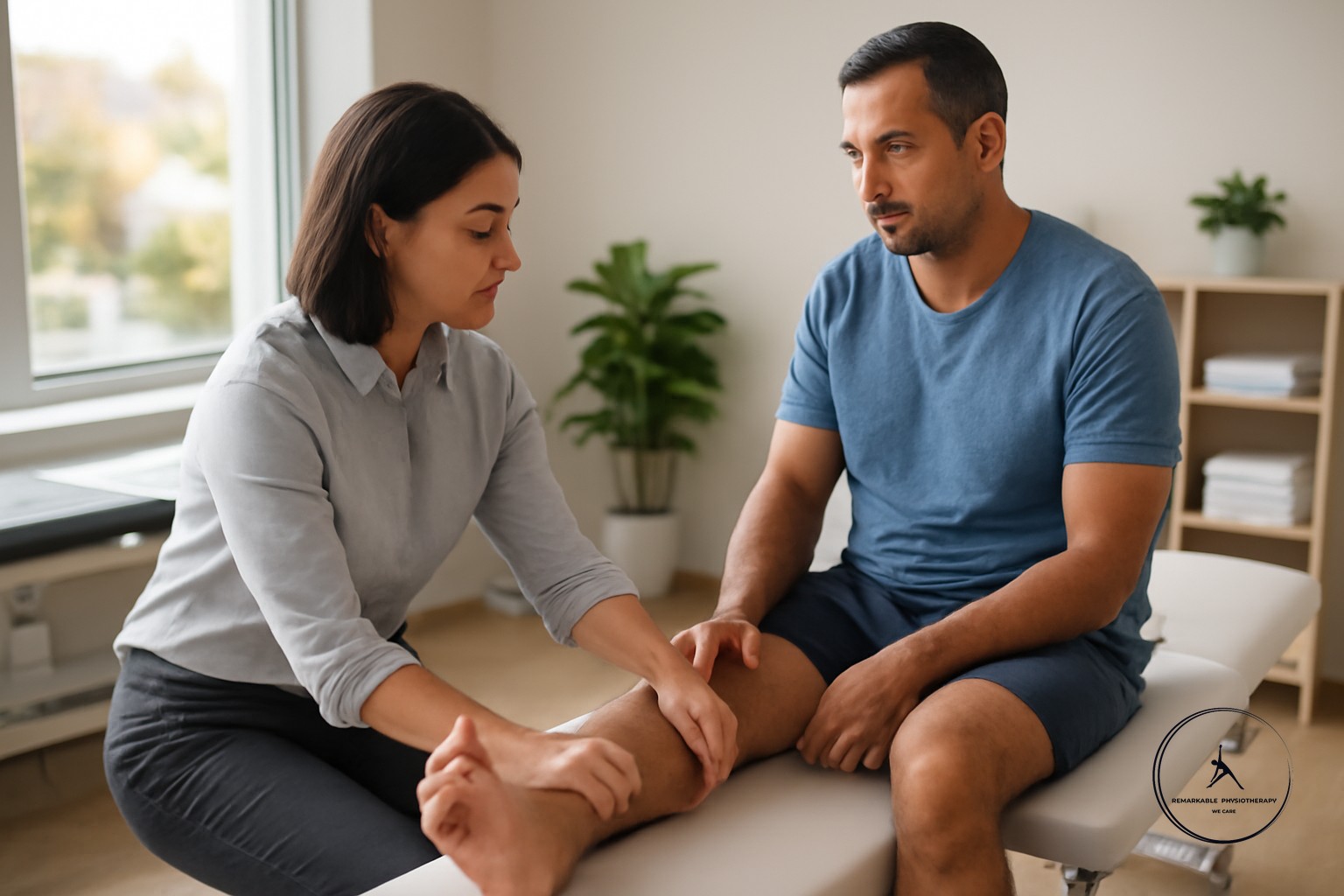
An ankle sprain can interrupt walking, work, exercise, and everyday errands. The injury happens when the ankle ligaments are stretched or torn, and the amount of pain, swelling, and loss of function can vary. If you are looking for ankle sprain physiotherapy in Markham, the first goal is not to rush back to activity—it is to understand the injury, protect the ankle appropriately, and rebuild movement step by step.[1]
What should you do after an ankle sprain?
During the early stage, reduce activities that sharply increase pain and use a level of support that makes walking safer. Elevation and compression may help manage swelling for some people. Complete rest for an extended period is not always the objective; current rehabilitation guidance supports a progressive return to weight-bearing and exercise when appropriate for the injury and the person.[2]
A simple early plan may include:
- Protecting the ankle from another twist or fall.
- Using supportive footwear, a brace, or another aid if recommended.
- Moving the ankle gently within a comfortable range rather than forcing painful motion.
- Gradually increasing walking only when symptoms remain manageable.
- Monitoring swelling, bruising, balance, and your ability to put weight through the foot.
Seek prompt medical assessment when there is an obvious deformity, severe or rapidly worsening pain, an inability to bear weight, significant numbness, or concern about a fracture. A blog cannot determine whether an injury is a sprain, fracture, tendon injury, or another condition.
When may a physiotherapy assessment be useful?
An assessment may be useful when walking remains difficult, swelling or pain is not settling, the ankle repeatedly gives way, or you need a safe plan for returning to work or sport. In Ontario, physiotherapists are expected to gather relevant health information, assess the patient, discuss findings, and develop an appropriate treatment plan within their professional scope.[3]
At Remarkable Physiotherapy, an ankle assessment may examine:
- How the injury occurred and whether there have been previous ankle injuries.
- Walking, weight-bearing tolerance, swelling, and tender areas.
- Ankle movement, strength, and control.
- Balance and the ability to perform tasks related to work, recreation, or sport.
- Whether the findings suggest that medical assessment or imaging should be considered.
What can ankle sprain rehabilitation include?
The plan depends on the assessment and the stage of recovery. It may include education, progressive range-of-motion work, strengthening, balance exercises, and activity-specific retraining. Clinical practice guidance for lateral ankle sprains supports structured therapeutic exercise and progressive loading, with external support considered according to injury severity and individual needs.[2]
1. Restoring comfortable movement
Early exercises may focus on comfortable ankle motion. The purpose is to reduce stiffness and prepare for more demanding tasks—not to push through sharp pain.
2. Rebuilding strength
As symptoms settle, exercises may target the muscles around the ankle and lower leg. The difficulty should increase gradually and reflect what you need for walking, stairs, work, or sport.
3. Improving balance and control
After a sprain, some people notice unsteadiness or repeated rolling of the ankle. Balance and neuromuscular exercises may be included to improve control during everyday and athletic movements. Readers experiencing ongoing unsteadiness can also review the clinic’s balance disorder treatment information.[2]
4. Planning a return to activity
Returning to running, court sports, hiking, or physically demanding work should be based on function rather than the calendar alone. A plan may consider walking tolerance, ankle movement, strength, balance, hopping or change-of-direction ability, and confidence.
How can you reduce the chance of another ankle sprain?
No strategy can prevent every injury, but a consistent rehabilitation program can address modifiable factors. Depending on your assessment, that may mean continuing strength and balance exercises, progressing activity gradually, wearing suitable footwear, and using an ankle brace for selected higher-risk activities.
Related ankle and balance care
For more information about persistent symptoms or related rehabilitation options, visit the clinic’s ankle pain treatment page, balance disorder treatment page, and therapeutic exercise service page.
Frequently asked questions
Can I walk on a sprained ankle?
It depends on the severity of the injury. Some people can begin protected, comfortable weight-bearing early, while others require more support or medical assessment. Do not force walking when pain is severe or the ankle feels unsafe.[2]
How long does an ankle sprain take to recover?
Recovery varies with the injury, previous sprains, activity demands, and rehabilitation progress. A mild injury may settle sooner than a more significant ligament injury. Functional milestones are usually more useful than promising a fixed recovery date.
Do I need imaging?
Not every ankle sprain requires imaging. A qualified clinician can screen for findings that may warrant medical review or an X-ray. Seek prompt care if you cannot bear weight, notice deformity, or have severe or worsening symptoms.
Can physiotherapy help with recurring ankle instability?
A physiotherapy assessment can identify movement, strength, and balance deficits that may contribute to repeated ankle rolling. A plan may include progressive strengthening, balance training, activity retraining, and guidance about external support.[2]
Book an ankle assessment in Markham
If an ankle sprain is limiting your walking, work, or return to activity, Remarkable Physiotherapy can assess your current function and discuss an individualized rehabilitation plan.
Remarkable Physiotherapy
8 Shadlock Street, Unit 1, Markham, Ontario
289-800-0441
Book an appointment online
Educational disclaimer: This article provides general information and is not a diagnosis or a substitute for individualized medical advice. Seek urgent care for a serious injury, severe or worsening symptoms, or concerns about a fracture.